
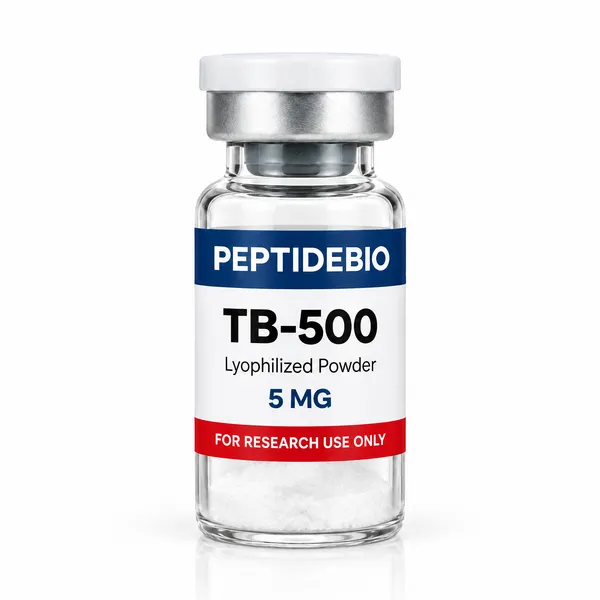
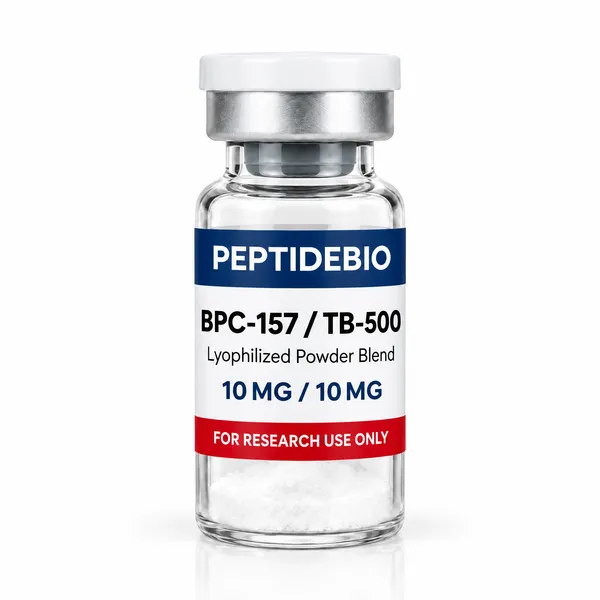
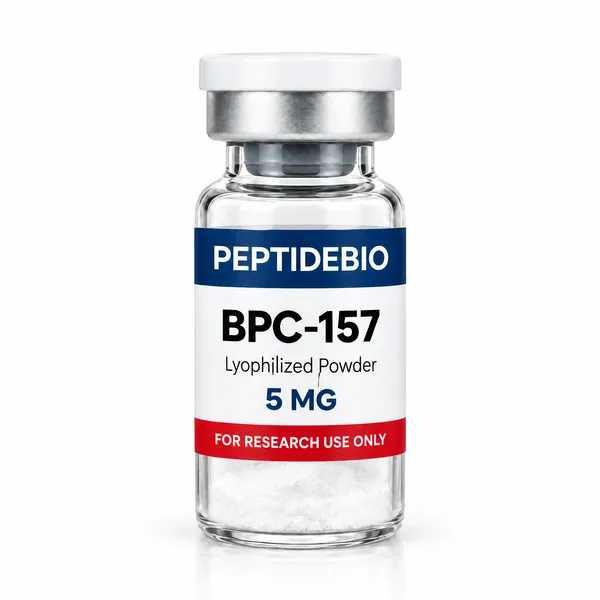
BPC-157 or TB-500: the structural difference
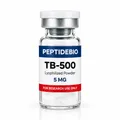
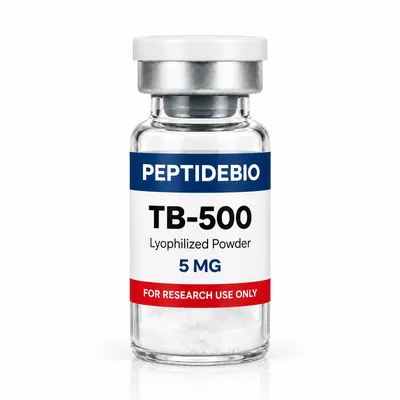
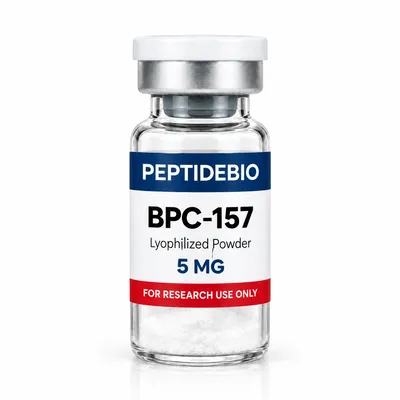
The two peptides have nothing in common except the research field. BPC-157 is a linear chain of 15 amino acids whose sequence comes from a protein of human gastric juice; its molecular weight is about 1,419 Da. TB-500 reproduces the actin-binding segment of thymosin beta-4, a 43 amino acid protein found in most mammalian cells. Which one a laboratory chooses depends on the model: gut and tendon tissue models are mostly published with BPC-157, actin and cell migration assays with TB-500.
Single vials or the BPC-157 TB-500 blend
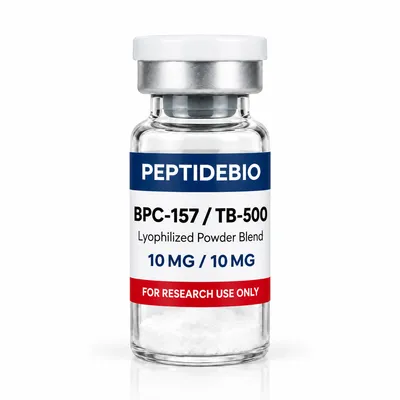
Both peptides come in 5 mg and 10 mg vials. For research designs that work with both compounds in the same ratio, the BPC-157 and TB-500 blend contains 10 mg of each in one vial, with one reconstitution step. The blend fixes the ratio at 1:1; single vials leave it open. Our guide on when peptide blends make sense in a research protocol explains the trade-off.
Documentation and handling
TB-500 and the blend carry a certificate of analysis for documented batches, reported by mass spectrometry (identity) and HPLC (purity). Send us the lot number on your vial and we send the report for that batch. All three products are lyophilised powder that is stored sealed at -20 °C and reconstituted with bacteriostatic water in the laboratory.
All compounds on this page are research chemicals for laboratory use only. They are not medicines, supplements, foods or cosmetics and are not intended for human or veterinary use.